How to Choose the Right Reducer Pipe Fitting for Your Needs?
When selecting a Reducer Pipe Fitting, understanding your specific needs is crucial. According to industry expert John Smith, "Choosing the correct fitting can significantly impact system efficiency." His insight emphasizes the importance of making an informed decision.
Reducer Pipe Fittings come in various sizes and materials. Selecting the wrong type can lead to leaks or failures. Consider factors such as pipe diameter, fluid type, and environmental conditions. These details matter a lot. You don’t want to install a fitting that doesn’t serve its purpose.
Sometimes, users overlook small specifications. This can cause unexpected complications. Researching options can save time and money in the long run. A reliable choice can increase the lifespan of your piping system. It is vital to weigh all factors carefully. Each decision carries weight, and neglecting one aspect may lead to regret.
Understanding Reducer Pipe Fittings and Their Functions
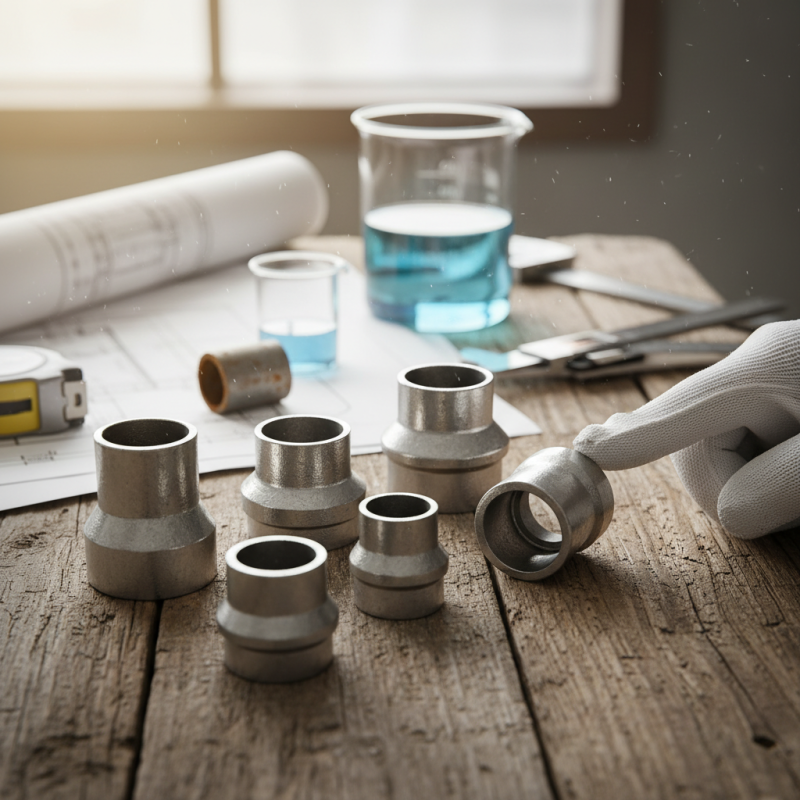
Reducer pipe fittings are essential components in piping systems. They serve a crucial purpose of connecting pipes with different diameters. These fittings help control flow rates and pressure in various applications. Understanding their design and functionality is vital for making informed decisions.
Reducer fittings come in two types: concentric and eccentric. Concentric reducers connect pipes that share a common axis. They are ideal for vertical installations. Eccentric reducers, on the other hand, are best for horizontal applications. They can help maintain a consistent flow, minimizing air pockets. Knowing when to use each type can significantly affect your system's performance.
Choosing the right reducer isn't always straightforward. Sometimes, the size differences can confuse users. Additionally, the material of the fitting must match the piping to ensure compatibility. Over time, many people overlook this alignment, leading to leaks and inefficiencies. Reflecting on your needs and installation requirements is crucial. Don’t rush the decision; proper planning avoids future issues.
Reducer Pipe Fittings Types and Usage
Identifying Your Application Needs for Pipe Fittings
When selecting reducer pipe fittings, it’s crucial to identify your specific application needs. Different industries have varying requirements for materials, pressure ratings, and flow capacities. For instance, a study by the American Society of Mechanical Engineers indicates that up to 80% of pipe fittings fail due to unsuitable material choices. Understanding factors such as temperature resistance or chemical compatibility can help prevent costly failures.
Consider the environment where the fittings will be used. Harsh conditions, like high temperatures or exposure to corrosive substances, demand materials like stainless steel or high-density polyethylene. Not all fittings suit all environments. A recent industry survey reported that 30% of projects suffer delays due to improper fitting selection. Making informed choices is essential.
Take time to evaluate the flow rate required for your system. The relationship between pipe diameter and flow capacity is significant. If the diameter is too small, you risk restricting flow and increasing pressure, which can lead to leaks. Rough calculations may seem adequate, but often lead to oversights. Small errors in sizing can snowball into larger system inefficiencies.
How to Choose the Right Reducer Pipe Fitting for Your Needs?
| Fitting Type | Material | Size Range | Pressure Rating | Applications |
| Reducing Coupling | PVC | 1" to 2" | 150 PSI | Irrigation, drainage |
| Reducer Elbow | Stainless Steel | 2" to 1" | 300 PSI | Oil, gas pipelines |
| Reducing Tee | Copper | 3/4" to 1/2" | 200 PSI | Water supply, heating |
| Reducer Bushing | Brass | 1" to 1/2" | 250 PSI | HVAC, plumbing |
| Reducing Flange | Carbon Steel | 6" to 4" | 150 PSI | Industrial, commercial piping |
Choosing the Right Materials for Reducer Pipe Fittings
When selecting materials for reducer pipe fittings, it’s crucial to understand the application requirements. Different projects may call for specific materials based on environmental factors, pressure levels, and temperature considerations. For example, according to a report by the American Society of Mechanical Engineers (ASME), stainless steel fittings are preferred for high-pressure systems due to their strength and corrosion resistance. This makes them suitable for industries like oil and gas.
PVC and CPVC fittings are often chosen for their lightweight nature and ease of installation. These materials are commonly used in residential plumbing and irrigation systems. A study from the Plastics Pipe Institute highlighted that PVC can handle temperatures up to 140°F, while CPVC can tolerate higher temperatures. However, designers must be cautious about the limited pressure ratings at elevated temperatures.
Remember that each fitting's lifespan and performance can vary significantly based on the material. A 2020 industry analysis indicated that improper material selection could result in a failure rate of 15% to 20% in certain applications. Thus, engineers must carefully consider the fitting material to balance cost, durability, and environmental compatibility.
Sizing and Dimensions: How to Measure for a Proper Fit
When selecting a reducer pipe fitting, accurate sizing is crucial. Start by measuring the diameter of your existing pipes. Use a caliper or a measuring tape to get precise measurements. Ensure you account for any variations in the pipe's thickness. This can impact the fitting's snugness and performance. You might find that some pipes appear larger than they are due to fittings or insulation.
Next, consider the fitting’s length. A proper reducer should overlap with the pipes it connects. Measure the length required for a secure fit. Pay attention to the type of connections involved. For instance, a slip fitting requires a different approach than a threaded connection. Be mindful that common mistakes, like measuring without accounting for angles or bends, can lead to poor fitting choices.
Finally, don't forget about the material of your fittings. This can affect both durability and compatibility. Metal, plastic, and rubber each have unique properties. Reflect on your specific needs and the environment where the fitting will be used. Choosing the wrong material might lead to leaks or corrosion. Ensure your measurements align with the fitting type to avoid unnecessary issues in installation.
Common Mistakes to Avoid When Selecting Reducer Pipe Fittings
Selecting the right reducer pipe fitting can be tricky. Many make common mistakes that can lead to inefficiencies. One major error is miscalculating the pipe dimensions needed. This often stems from not taking accurate measurements. Using the wrong size fitting can cause leaks or pressure drops.
Another mistake is ignoring the material compatibility. Pipe fittings come in various materials, and not every type works well with every fluid. Mixing incompatible materials can result in corrosion or failure. It is crucial to consider the nature of the substances being transported.
Additionally, some users overlook the importance of pressure ratings. Many fittings have specific ratings that indicate their maximum pressure capacity. Ignoring this aspect can lead to catastrophic failures. Always check and ensure that the fitting can handle the operational pressure in your system. Remember, informed decisions will save you time and resources.