What Is SUS201 Stainless Steel Coil and Its Uses?
What Is SUS201 Stainless Steel Coil and Its Uses? This question matters when cost, formability, and corrosion resistance must work together. Sus201 Stainless Coils are chromium-manganese austenitic coils developed partly to reduce nickel dependence. Their chemistry can vary by standard and mill, so buyers should verify the material certificate.
The International Stainless Steel Forum reported approximately 58.4 million tonnes of crude stainless steel production in 2023. That scale shows stainless steel remains essential across construction, appliances, transport, and fabrication. Yet production volume does not make every grade suitable for every environment. SUS201 commonly serves indoor panels, kitchen equipment, furniture, decorative trim, welded components, and light architectural work. It can be slit into narrow widths, leveled, stamped, and supplied with finishes such as 2B or brushed No. 4.
Dr. Edwin Basson, former chief executive of worldstainless, described stainless steel as “a material for the future.” That statement supports long service life, recycling, and resource efficiency, but grade selection still requires discipline. SUS201 is not automatically a substitute for SUS304. Chloride exposure, coastal air, chemical cleaning, and high humidity may demand stronger resistance. That assumption needs care.
The World Stainless “Stainless Steel in Figures 2024” report provides useful market context, while ASTM A240 and EN 10088 help frame product requirements. However, specifications differ across markets. Check thickness, width tolerance, surface finish, mechanical properties, and corrosion expectations before ordering. The practical lesson is simple. Sus201 Stainless Coils can be economical and versatile, but performance depends on the application, processing method, and verified chemistry.
SUS201 Stainless Steel Coil: Definition and Key Characteristics
What Is SUS201 Stainless Steel Coil and Its Uses?
SUS201 Stainless Steel Coil: Definition and Key Characteristics
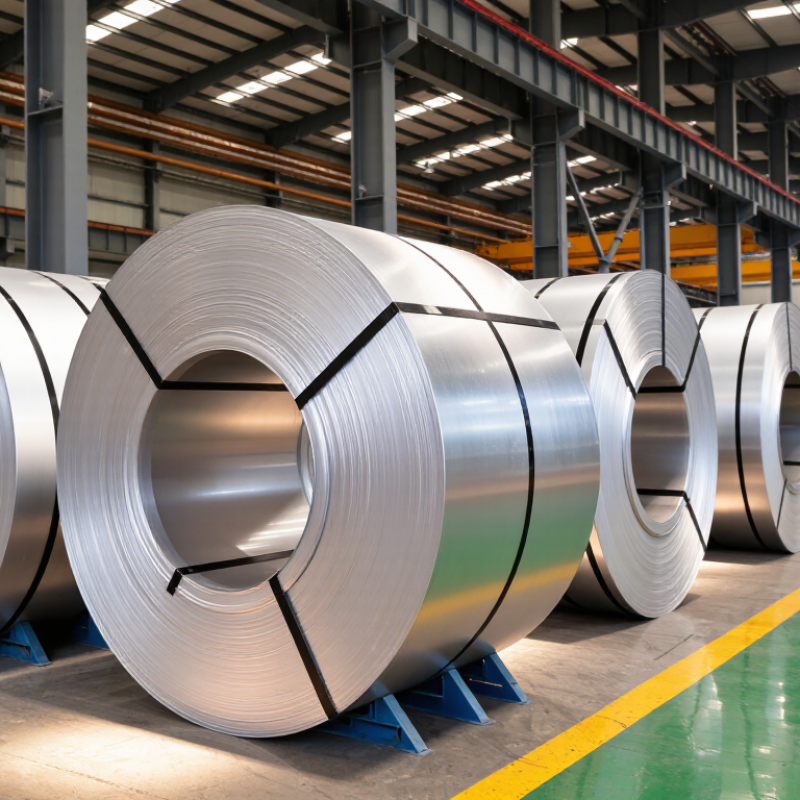
SUS201 stainless steel coil is a continuously rolled strip made from austenitic stainless steel. Its composition uses chromium and manganese, with less nickel than many common stainless grades. This design can lower material cost while maintaining useful strength and formability.
In the annealed condition, SUS201 is generally nonmagnetic. Cold forming may create slight magnetism and increase hardness. It also offers a smooth surface, good resistance to everyday indoor corrosion, and practical weldability when suitable procedures are followed. Coil production supports precise slitting, stamping, bending, and cutting. Thin strips may become appliance panels, kitchen equipment parts, decorative trim, light fixtures, and interior construction components.
SUS201 is not a universal substitute for SUS304. That distinction matters. Its corrosion resistance is usually less dependable in salt spray, strong chemicals, and constantly wet environments. Fabricators should check the service location before choosing it. A dry indoor panel and a coastal handrail face very different risks. Surface finish, thickness, edge quality, and coil flatness also affect performance. Buyers should review the material certificate and confirm chemical composition, mechanical values, and applicable standards. Price alone is a weak selection method. In some projects, a higher-grade stainless steel may reduce maintenance problems later.
Chemical Composition and Mechanical Properties of SUS201
SUS201 stainless steel coil is an austenitic material developed to reduce nickel content. Its chemical balance relies more heavily on manganese and nitrogen. Typical composition includes 16–18% chromium, 3.5–5.5% nickel, and 5.5–7.5% manganese. Carbon is usually limited to 0.15%, while silicon remains near 1%. Phosphorus and sulfur require tighter control. Nitrogen may reach approximately 0.25%, depending on the applicable standard. Chromium supports corrosion resistance by forming a passive surface film. Manganese helps maintain the austenitic structure, but it does not fully replace nickel in every service condition.
Typical mechanical properties include a tensile strength of at least 515 MPa, a yield strength near 275 MPa, and elongation around 40%. Hardness commonly stays below approximately 241 HB, although the exact limit depends on the specification. These values describe annealed material, not every coil supplied in practice. Cold rolling can increase strength and hardness while reducing ductility. That difference matters during deep drawing, bending, and slitting. SUS201 can suit decorative panels, household equipment, light structural parts, and formed components in moderate environments. It is not an automatic substitute for higher-nickel stainless grades. Salt exposure may reveal its limitations sooner. Checking the mill certificate, thickness, surface finish, and heat-treatment condition is essential. I would also test forming performance before approving a large production batch.
How SUS201 Stainless Steel Coils Are Manufactured
SUS201 stainless steel coil is produced through a controlled sequence of melting, casting, rolling, and surface treatment. Its chemistry typically uses manganese and nitrogen to reduce nickel dependence. Exact composition varies by specification, so buyers should verify the mill certificate rather than trust the grade name alone.
Production begins in an electric furnace, where recycled steel, chromium, manganese, nickel, and other ferroalloys are melted. Argon-oxygen decarburization then adjusts carbon and alloy content. The molten steel is continuously cast into slabs, usually several inches thick. Hot rolling reduces slab thickness while temperatures remain high, improving dimensional consistency.
The International Stainless Steel Forum reported 58.4 million tonnes of stainless crude steel production in 2023, showing the scale behind these operations.
After hot rolling, coils are annealed and pickled. Heat softens the structure, while acid cleaning removes oxide scale. Cold rolling creates thinner gauges and a brighter, tighter surface. Final annealing, pickling, skin passing, and slitting prepare coils for fabrication. ASTM A240 and JIS G4304 provide useful reference points, but they do not replace purchase specifications. In practice, surface defects can appear after rolling, especially when tension, lubrication, or cleaning is poorly controlled. That detail is easy to overlook. The World Steel Association recorded about 1.89 billion tonnes of global crude steel production in 2023, placing stainless processing within a highly demanding steel supply chain.
Common Uses of SUS201 Stainless Steel Coil
What Is SUS201 Stainless Steel Coil and Its Uses?
SUS201 stainless steel coil is a chromium-manganese austenitic material with lower nickel content than many 300-series grades. Its composition supports good formability, attractive surface finish, and competitive pricing. Industry mill data commonly lists about 16–18% chromium and 3.5–5.5% nickel, although exact limits depend on the applicable specification and production route.
Common Uses of SUS201 Stainless Steel Coil
SUS201 coil is widely processed into kitchen sinks, cookware, trays, shelving, and appliance panels. Its smooth surface suits indoor furniture, elevator trim, wall panels, and decorative strips. Fabricators also use it for light-duty tubes, brackets, and stamped components. The International Stainless Steel Forum reported global stainless crude steel production of about 58.4 million tonnes in 2023, showing the scale of demand for stainless materials across construction, transport, and consumer products.
It performs well in dry or mildly humid environments. It needs care near saltwater, strong chemicals, and persistent condensation. Chloride exposure can cause staining or pitting faster than expected. That matters for coastal kitchens. Surface finishing, cleaning practice, and forming quality strongly affect service life. A polished coil may look excellent at delivery, but scratches can expose weaker areas during use. SUS201 is not a universal substitute for higher-nickel stainless grades. The cheaper choice can become expensive when maintenance is ignored.
Advantages, Limitations, and Selection Considerations
SUS201 stainless steel coil is an austenitic material containing chromium, nickel, and increased manganese. Its lower nickel content can reduce purchasing costs compared with some common stainless grades. The coil usually offers a bright surface, steady thickness, and useful formability. It suits kitchen equipment, appliance panels, light structural parts, sinks, and decorative trim. It also hardens noticeably during cold forming.
Its main advantage is practical balance. SUS201 can be punched, bent, and roll-formed with suitable tooling. It often provides an attractive finish after polishing or brushing. In dry indoor environments, its corrosion resistance is generally adequate. However, it is not a universal substitute for higher-alloy stainless steel. Chloride spray, acidic cleaning agents, and persistent moisture can cause staining or pitting. Welded areas may also need careful cleaning and inspection. The grade can become partly magnetic after severe cold work. That detail sometimes surprises fabricators.
Selection should match the actual service environment, not only the quoted price. Check thickness, coil width, surface condition, edge quality, hardness, and material test documents. For deep drawing, trial forming is wise because springback and cracking may vary with temper. For coastal equipment or chemical contact, another grade may be safer. I would not choose SUS201 by cost alone. A small sample test can reveal surface defects, forming limits, and cleaning problems before production. The decision may still feel imperfect, especially when appearance requirements and corrosion exposure conflict.
SUS201 Stainless Steel Coil: Composition Profile and Selection Guidance
SUS201 is a chromium-nickel-manganese austenitic stainless steel. Its reduced nickel content is balanced by higher manganese, which can lower material cost while providing useful formability and corrosion resistance for general indoor and light-duty applications.
The chart shows maximum specified chemical composition limits for SUS201 under ASTM A240 Type 201, expressed as weight percentages. Actual limits may vary slightly by applicable standard, product form, and purchasing specification.
Typical Uses
SUS201 coil is commonly selected for indoor kitchen equipment, household components, decorative and architectural trim, light-duty enclosures, and formed parts where moderate corrosion resistance and economy are important.
Advantages and Limitations
Advantages include a relatively low nickel level, good availability in coil form, useful forming performance, and an attractive stainless-steel appearance. Compared with higher-nickel grades such as SUS304, SUS201 generally offers lower resistance to chloride exposure, coastal atmospheres, chemical processing environments, and demanding outdoor service. Selection should therefore consider corrosion conditions, forming requirements, surface finish, thickness, applicable standard, and required mechanical properties.