
Contract Manufacturing for Injection Molded Plastic Products in North America
(800) 824.0607
The search for a reliable Fusion Welding Machine increasingly begins online, but price alone cannot prove value. Buyers need verified heating accuracy, pressure control, joint alignment, and after-sales support. A machine may look impressive in a product photograph. Its clamp stiffness and temperature recovery matter more on a cold jobsite.
Industry data supports this growing market. Grand View Research estimated the global welding equipment market at approximately USD 15.6 billion in 2023. Its report projects continued growth through 2030, supported by construction, automotive, energy, and infrastructure demand. MarketsandMarkets also forecast strong expansion, linking growth to automation and improved welding productivity. These figures cover welding equipment broadly, not every Fusion Welding Machine. That distinction matters.
Professor Sindo Kou, author of Welding Metallurgy, describes the foundation simply: “Welding is a process of joining materials by fusion.” His statement explains why heat stability and material compatibility deserve careful attention. Experienced contractors also inspect data logging, cutter quality, electrical protection, and spare-part availability. Online reviews help, but they can be incomplete or overly generous. I have found that product manuals often reveal more than polished listings. Look for published welding ranges, calibration procedures, warranty terms, and independent certifications. Also check whether the supplier provides operator training. A low-cost machine can become expensive when alignment drifts or replacement heaters disappear. This guide compares leading manufacturers using practical specifications, report-based market context, and buyer experience. Some rankings remain subjective. Regional service quality can change the final decision.
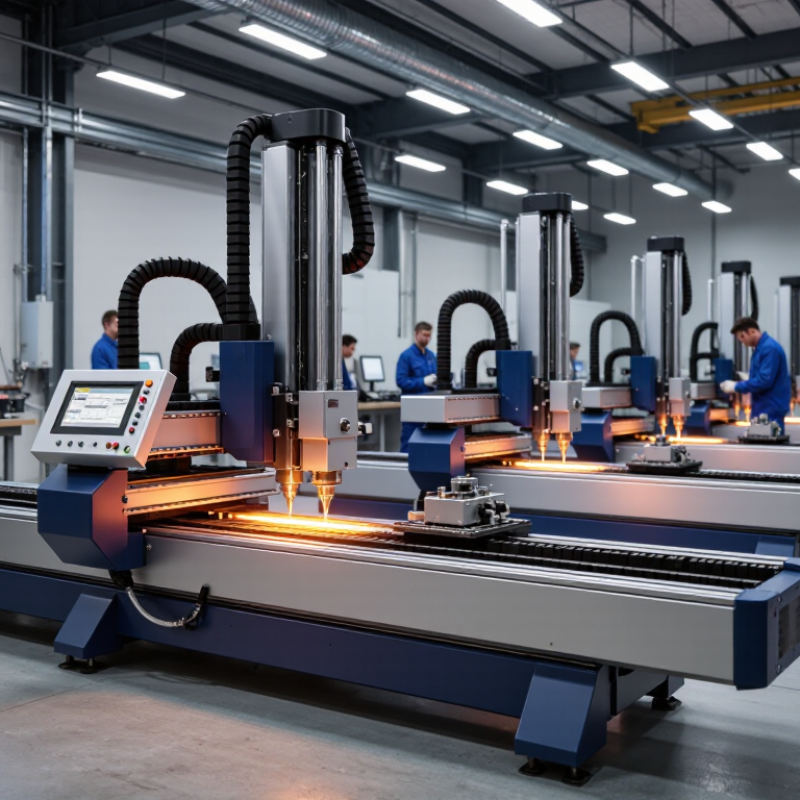
Choosing the right fusion welding machine online starts with understanding how each type works. Butt fusion machines join heated pipe ends under controlled pressure. Electrofusion units use fittings with embedded heating wires and require accurate electrical output. Socket fusion tools suit smaller pipework, where clean alignment is critical. Each method serves a different installation condition.
Core specifications deserve careful attention. Check the supported pipe diameter range, heating plate temperature, clamping force, and operating voltage. A machine should maintain stable heat, not merely reach a high temperature. Digital pressure control can reduce operator errors. Data logging is useful for audits and quality records. Weight also matters when crews work in trenches or remote areas. Small details matter.
Standards provide a practical reliability check. Look for equipment aligned with ISO 12176, ISO 21307, ASTM F2620, or applicable local requirements. The correct standard depends on the pipe material, joining method, and project location. Online listings should show calibration information, test reports, manuals, and replacement-part support. I would also confirm warranty terms before paying. A low price may hide weak clamping accuracy or poor documentation. Specifications are not everything. Real installers still inspect fit, transport damage, and control response before production welding. Some listings use vague terms like “industrial grade,” which should invite questions, not trust.
Welding current is a key specification when comparing fusion welding machines. The chart shows representative operating ranges for common arc-welding processes. Actual limits vary according to machine design, electrode or wire size, duty cycle, material, and application.
Process identification follows ISO 4063: SMAW is process 111, GTAW/TIG is process 141, GMAW/MIG-MAG uses processes 131 and 135, and SAW is process 121. IEC 60974-1 is commonly used for arc-welding power-source requirements.
Top Fusion Welding Machine Manufacturers to Buy Online?
How to Compare Manufacturers Using ISO 12176 and ASTM F2620 Criteria
Buying a fusion welding machine online requires more than comparing prices and heater sizes. Ask manufacturers which ISO 12176 part applies to the equipment. Butt fusion and electrofusion machines have different requirements. Request calibration records for temperature sensors, pressure gauges, and hydraulic systems. Clear records show stronger process control.
ASTM F2620 focuses on heat-fusion procedures for polyethylene pipe and fittings. It does not certify a machine or guarantee every joint. A reliable manufacturer should explain how its equipment supports heating time, pressure, alignment, and cooling controls. Look for data logging, readable displays, replaceable parts, and manuals with practical setup photos. Ask whether test reports identify the exact model and production configuration.
Details matter.
I once trusted a polished product page as proof of compliance. That was a mistake. Online claims can be incomplete, outdated, or poorly translated. Compare the manufacturer’s technical file with independent test evidence, service response times, and operator training options. Check whether spare heaters and seals are available in your region. A smaller machine may appear efficient, yet struggle with thick pipe or cold outdoor conditions. No checklist catches every site problem, so review the intended pipe sizes, power supply, weather exposure, and joint records before ordering.
Top Fusion Welding Machine Manufacturers to Buy Online?
Buying a fusion welding machine online requires more than comparing prices. Pressure, temperature, power, and pipe-size range determine field performance. ASTM F2620 guidance commonly specifies a heater surface temperature of 400–450°F (204–232°C) for polyethylene butt fusion. The machine should hold this range steadily, even after contact with a cold pipe. A digital display helps, but calibration records matter more.
Pressure needs careful attention. ASTM F2620 references an interfacial pressure of about 60–90 psi, while actual machine pressure must include carriage drag. PPI’s PE Handbook explains that pipe diameter, wall thickness, and material grade affect fusion settings. Therefore, avoid machines with one fixed pressure setting. Look for adjustable hydraulic control and a readable gauge. Power requirements also vary. Many field heaters use roughly 1.5–3 kW, but voltage and recovery speed can change the result. Bigger is not always better.
Tips: Match the machine to your real pipe range, not an advertised maximum. A 2–8 inch unit suits smaller utility work, while 8–24 inch equipment needs stronger clamping and lifting support. Check whether the supplier provides ISO 21307 or ASTM-based procedures, calibration service, and replacement parts. I would also request a cold-start recovery test. Online specifications can look complete, yet omit clamp accuracy or generator compatibility. That omission deserves a second look.
| Equipment Category | Typical Fusion Method | Pressure / Force Control | Heating Temperature Range | Typical Electrical Power | Usable Pipe or Fitting Size Range | Typical Online-Buying Use Case | Key Technical Checks |
|---|---|---|---|---|---|---|---|
| Manual Socket Fusion Machine | Heated tool socket fusion for PP, PE, and related thermoplastics | Manual insertion force; no hydraulic pressure circuit | 200–300 °C Common PP operating setpoint: approximately 260 °C | 0.8–2.0 kW | 16–110 mm outside diameter | Small-diameter plumbing, irrigation, laboratory, and maintenance work | Interchangeable heating bushes, temperature control accuracy, electrical protection, and tool coating quality |
| Manual Hydraulic Butt-Fusion Machine | Heated plate butt fusion with manually controlled hydraulic carriage | 0–6.3 MPa hydraulic gauge range | 180–280 °C adjustable | 1.5–4.0 kW | 40–315 mm outside diameter | Field installation of PE and PP pipe in water, gas, drainage, and irrigation systems | Clamping inserts, carriage travel, drag-pressure compensation, heating-plate flatness, and pressure-gauge calibration |
| Hydraulic Butt-Fusion Machine | Hydraulically controlled heated plate butt fusion | 0–10 MPa hydraulic gauge range | 180–280 °C adjustable | 2.0–8.0 kW | 63–630 mm outside diameter | Contractor work requiring repeatable clamping and fusion cycles | Pressure stability, milling-tool capacity, data logging, clamp alignment, and compatibility with PE100/PE80 procedures |
| Heavy-Duty Hydraulic Butt-Fusion Machine | Large-diameter heated plate butt fusion | 0–16 MPa hydraulic gauge range | 180–280 °C adjustable | 4.0–15.0 kW | 315–1600 mm outside diameter | Municipal water mains, wastewater, industrial pipelines, and large infrastructure projects | Maximum fusion force, lifting and transport method, three-phase power requirements, reducer inserts, and hydraulic-service access |
| CNC or Automatic Butt-Fusion Machine | Computer-controlled heated plate butt fusion with automatic cycle management | 0–16 MPa hydraulic gauge range | 180–280 °C adjustable | 4.0–20.0 kW | 63–2000 mm outside diameter | High-volume utilities, qualified pipeline contractors, and traceable production work | Standards-supported recipes, pressure and temperature recording, calibration certificates, data export, and emergency-cycle recovery |
| Electrofusion Control Unit | Electrical heating of embedded fitting wires | No hydraulic fusion pressure generated; external restraints may be required during cooling | Fitting-controlled heating cycle; commonly monitored by voltage, current, and time rather than plate temperature | 0.5–5.0 kW input | 20–1200 mm fitting diameter, depending on the fitting system | Repair couplers, tees, reducers, service saddles, and installations where butt fusion is impractical | Barcode or manual parameter entry, output-voltage stability, generator compatibility, earth protection, and fitting-cooling time |
| Electrofusion Saddle-Fusion Kit | Electrofusion of tapping saddles and branch fittings | Mechanical clamping or strap restraint; fitting instructions determine required holding force | Fitting-controlled electrical cycle | 0.5–3.0 kW input | Main pipe approximately 63–1200 mm; branch outlets commonly 20–315 mm | Live-network repairs, branch connections, and confined installation areas | Clamp geometry, pipe scraping and oxidation removal, fitting identification, cable condition, and cooling-time control |
Top Fusion Welding Machine Manufacturers to Buy Online?
Online buyers should compare evidence, not polished product pages. The ISO Survey reports over one million ISO 9001 certificates worldwide, but certification alone does not prove welding quality. Check whether the manufacturer’s certificate covers design, production, and technical service. For plastic pipe fusion equipment, verify alignment with ISO 12176 and relevant regional safety requirements. A clear certificate number matters. So does its issuing body.
Warranty terms often reveal operational confidence. Look for coverage periods, excluded parts, labor limits, and return procedures. A strong supplier should explain calibration support and replacement-part availability before payment. The International Trade Centre’s trade data shows machinery moves through complex global supply chains, making local service arrangements especially important. Ask where repairs happen. Ask who pays shipping. Get answers in writing.
Technical support should include manuals, training videos, diagnostic help, and response-time commitments. Some online manufacturers promise “lifetime support,” yet define nothing. That wording deserves caution. In my comparison work, a two-year warranty with accessible engineers can outperform a longer warranty with slow replies. This is an imperfect measure, but response records are useful. Request sample test reports, factory inspection evidence, and references from comparable welding applications. A low price may still become expensive when one failed heater delays installation.
Buying a fusion welding machine online requires more than comparing prices and photos. Supplier quality should be verified with evidence. Ask for machine specifications, electrical test reports, material certificates, and recent production photos. A live video inspection can reveal workshop conditions, labeling, cable quality, and testing procedures. Request a sample weld on your actual pipe material. Inspect bead uniformity, alignment, pressure control, and data records. Generic certificates are not enough.
Total cost also includes freight, import charges, installation, training, tooling, and replacement heating plates. Ask for an itemized quotation. Check whether software updates, calibration, and consumables are included. A low offer can become expensive after delivery. I would also request two customer references from similar industries. Their comments about delays may matter more than polished online reviews.
After-sales service needs clear terms. Confirm warranty length, response time, spare-parts availability, and remote troubleshooting methods. Ask who pays for return shipping when a major fault occurs. A supplier should explain preventive maintenance in practical language. One missed detail can stop a project. Some buyers overlook operator training, then blame the machine for avoidable errors. That deserves reflection. Keep every promise in the purchase contract, including delivery dates, acceptance tests, and service contacts. A reliable supplier welcomes specific questions instead of rushing the payment.