
Contract Manufacturing for Injection Molded Plastic Products in North America
(800) 824.0607

RFQ / CONTACT
Contract Manufacturing for Injection Molded Plastic Products in North America | (800) 824.0607

Top 10 Hardening Oven Manufacturers for Global Buyers

Choosing a Hardening Oven is a production decision, not merely an equipment purchase. Global buyers must compare temperature uniformity, atmosphere control, loading capacity, energy use, service response, and documented testing. A polished brochure cannot replace stable results on the factory floor.

Metallurgist George Krauss wrote, “The properties of steel are determined by its microstructure.” That principle remains central to hardening work. A dependable oven must control heating rates, soaking time, quenching transfer, and repeatability. Even a small temperature variation can affect hardness, distortion, and fatigue performance. The best manufacturers support these requirements with calibrated sensors, traceable records, practical maintenance access, and clear technical training.

This Top 10 Hardening Oven Manufacturers for Global Buyers guide evaluates suppliers through an industrial lens. It considers furnace design, automation, atmosphere options, batch flexibility, installation experience, and after-sales support across different regions. It also examines whether manufacturers understand real operating pressures, including limited floor space, changing steel grades, and rising energy costs.

No ranking fits every plant. That deserves attention. A large automotive supplier may need automated conveyor integration, while a smaller toolmaker may value simple controls and rapid service. Some published specifications also look stronger than daily performance. Buyers should request trial data, reference sites, calibration records, and realistic delivery terms before deciding. This guide offers a useful starting point, but technical verification remains essential. Performance must be measured, not assumed.
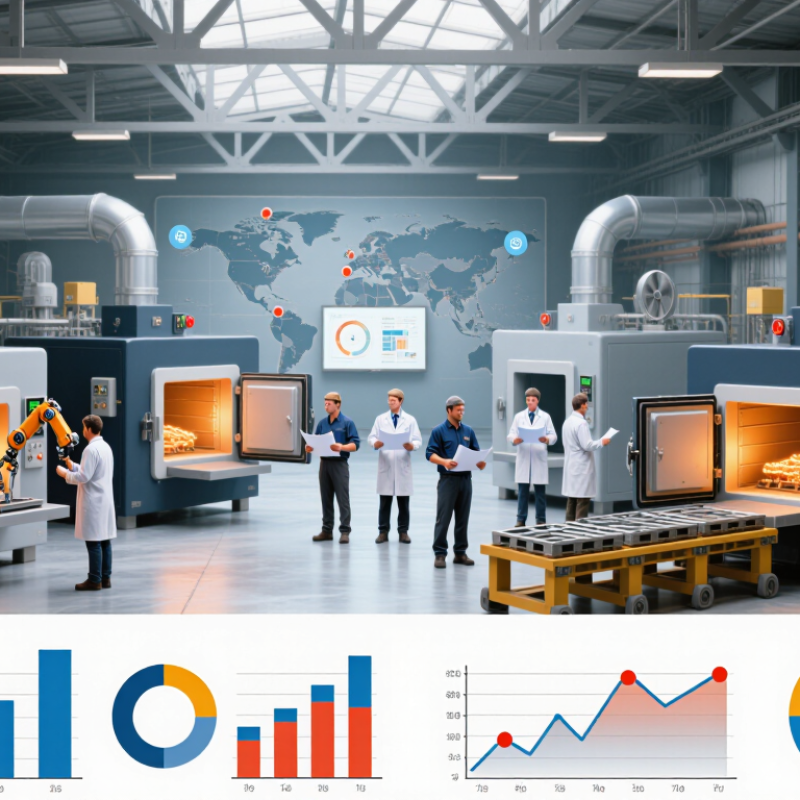
Top 10 Hardening Oven Manufacturers for Global Buyers

What Hardening Ovens Are and How They Support Industrial Heat Treatment

Top 10 Hardening Oven Manufacturers for Global Buyers

What Hardening Ovens Are and How They Support Industrial Heat Treatment

Hardening ovens heat steel and other alloys to controlled temperatures before quenching. This changes the material’s microstructure, improving hardness, wear resistance, and service life. In a production line, operators monitor temperature uniformity, atmosphere, loading patterns, and transfer time. A few seconds can affect final hardness.

Industrial ovens commonly operate between 750°C and 1,050°C, depending on the alloy and treatment schedule. The International Energy Agency reports that industry uses about 37% of global final energy. The U.S. Department of Energy also notes that industrial systems may lose 20% to 50% of input energy as waste heat. Better insulation, door sealing, recirculation, and heat recovery can reduce these losses.

Hardening ovens support batch and continuous processing. Batch systems suit changing part sizes, while continuous ovens deliver stable output for higher volumes. Experienced engineers still verify furnace uniformity through temperature surveys, test coupons, and calibrated sensors. Software helps, but it does not replace physical checks. That point is easy to underestimate.

A reliable oven should protect operators, record treatment data, and maintain repeatable airflow. Excessive airflow may waste energy. Insufficient circulation may create soft zones. The design calculation is never perfect; real workloads often expose hidden weaknesses. Global buyers should therefore examine service access, spare-part availability, energy data, and compliance documentation before comparing suppliers.

Key Features to Compare When Selecting a Hardening Oven Manufacturer

Selecting among the top 10 hardening oven manufacturers requires more than comparing price and heating capacity. Global buyers should examine temperature uniformity, atmosphere control, loading space, and repeatability under daily production conditions. Ask for documented test results, not attractive promises. A reliable manufacturer explains sensor locations, calibration intervals, and alarm responses in practical terms. Experience matters when a 600°C cycle must remain stable across a full rack of steel components.

Tips: Request a sample recipe using your material, part weight, and target hardness. Check whether the manufacturer supports installation, operator training, spare parts, and remote troubleshooting in your region. Review furnace insulation, door seals, cooling performance, and energy consumption. These details affect output, workplace comfort, and long-term maintenance costs. Do not ignore software. A clear interface should record cycle data and protect approved settings from accidental changes.

Ask about factory acceptance testing and onsite verification. The best comparison includes warranty scope, response times, and service coverage, not only technical specifications. Still, no checklist is perfect. A supplier may pass a demonstration test yet struggle with your actual basket design or production rhythm. Run a small trial batch before committing to a large installation. Record hardness results at several positions, because one good sample can mislead. That extra evidence makes the final decision more defensible.

Top 10 Hardening Oven Manufacturers Serving Global Industrial Buyers

Top 10 Hardening Oven Manufacturers for Global Buyers

For global industrial buyers, the top ten hardening oven manufacturers should offer more than heating equipment. They should understand production pressure, export requirements, and long-term maintenance. Reliable manufacturers typically provide controlled temperature systems, uniform airflow, programmable recipes, and documented testing. These details matter when processing steel parts, tools, or precision components.

Experienced suppliers can recommend batch, pit, or continuous ovens based on workload and material behavior. They should explain heating zones, insulation performance, quench integration, and energy use in practical terms. Strong manufacturers also support installation, operator training, spare parts, and remote troubleshooting. Ask for temperature uniformity reports and references from similar factories. A polished brochure is not enough. No ranking is perfect. Some suppliers may appear less impressive but deliver better field support.

Tips: Compare total ownership cost, not only the purchase price. Check chamber size, maximum operating temperature, control accuracy, and recovery time after loading. Confirm whether local technicians can respond quickly. Review safety interlocks and maintenance access before signing. Request a sample production test when possible. Small omissions can become expensive later. Also, leave room for future capacity; many buyers underestimate growth and select ovens that become restrictive within two years.

Top 10 Hardening Oven Manufacturers Serving Global Industrial Buyers

Rank Manufacturer Profile Primary Market Region Typical Oven Configuration Typical Operating Range Atmosphere and Process Options Typical Load Capacity Common Industrial Applications Common Compliance Options Global Buyer Considerations
1 Supplier Profile A Western Europe Continuous mesh-belt hardening line with integrated quench and tempering sections Up to approximately 1,100°C Endothermic gas, nitrogen-methanol, carbon potential control, oil or polymer quench Production-line scale; commonly several hundred kilograms per hour Automotive gears, shafts, bearings, fasteners, and mass-produced transmission components CE marking, ISO 9001-based quality systems, EN 746-2 safety design, customer validation protocols Strong fit for automated production, recipe management, traceability, and multi-zone temperature control
2 Supplier Profile B North America Sealed-quench batch furnace system with wash, temper, and atmosphere-control modules Approximately 650–1,100°C Nitrogen-methanol, endothermic gas, carbonitriding, oil, salt, or polymer quenching Small to medium batch loads, typically 100–1,500 kg Tooling, aerospace components, industrial gears, precision shafts, and general heat treatment NFPA 86, UL-listed control components where applicable, ISO 9001, customer-specific CQI requirements Suitable for flexible batch production and integration with North American electrical and safety practices
3 Supplier Profile C East Asia Vacuum hardening furnace with high-pressure gas quenching and optional tempering furnace Approximately 600–1,300°C Vacuum processing, nitrogen or argon gas quenching, partial-pressure heating, oil-free processing Laboratory to medium industrial loads, commonly 50–1,000 kg Mold and die steel, high-speed steel, aerospace parts, medical tools, and precision components CE or regional electrical certification, ISO 9001, vacuum-system testing, temperature uniformity surveys Well suited to clean surfaces, reduced oxidation, tight distortion control, and high-value components
4 Supplier Profile D Central Europe Pit-type or car-bottom furnace for large and heavy workpieces Approximately 750–1,200°C Air, nitrogen, protective gas, controlled cooling, and optional external quench systems Large loads, frequently 1–10 tonnes depending on furnace design Large forgings, wind-turbine parts, pressure-vessel components, dies, and heavy machinery parts EN 746-2, CE marking, ISO 9001, documented thermal uniformity and system accuracy testing Recommended where chamber depth, floor loading, crane access, and heavy-part handling are critical
5 Supplier Profile E Southern Europe Rotary hearth or pusher-type continuous furnace line for medium-to-high production volumes Approximately 800–1,100°C Endothermic gas, nitrogen-methanol, carbonitriding, integrated oil or polymer quench High-throughput production with loads commonly above 500 kg per hour Automotive powertrain parts, hubs, ring gears, bearings, and engineered steel components CE marking, ISO 9001, CQI-9 process audits where requested, PLC and data-logging requirements Favorable for repeatable cycle times, automated material flow, and reduced manual handling
6 Supplier Profile F South Asia Electric batch hardening oven with forced-air circulation and separate quench tank Approximately 500–1,000°C Air, nitrogen purge, protective atmosphere, oil or water-polymer quench Small to medium loads, typically 25–750 kg General engineering parts, agricultural machinery, fasteners, hand tools, and maintenance workshops ISO 9001, CE documentation where required, electrical safety testing, calibrated temperature controls Practical option for cost-sensitive buyers requiring modular equipment and straightforward maintenance
7 Supplier Profile G East Asia Fluidized-bed hardening and carbonitriding system with rapid heating and cooling Approximately 500–1,050°C Controlled gas, nitrogen, endothermic gas, carburizing, carbonitriding, and direct gas quenching Small to medium batch loads, generally 20–500 kg Small gears, pins, springs, cutting tools, wear parts, and precision components ISO 9001, CE or local conformity requirements, process gas safety procedures, calibration records Useful when rapid heat transfer, short cycle times, and uniform treatment of smaller parts are priorities
8 Supplier Profile H Northern Europe Low-oxygen or vacuum carburizing line with high-pressure gas quenching Approximately 850–1,050°C Low-pressure carburizing, acetylene or hydrocarbon gas, nitrogen or helium quenching Medium to high production loads, commonly 200–1,500 kg per batch Automotive gears, fuel-system parts, aerospace transmission components, and low-distortion parts CE marking, ISO 9001, CQI-9 documentation, process traceability, and temperature uniformity testing Strong choice for reduced intergranular oxidation, clean surfaces, and distortion-sensitive components
9 Supplier Profile I Middle East and Africa Custom batch furnace package with heating chamber, quench tank, washer, and tempering oven Approximately 600–1,100°C Air, nitrogen, protective gas, oil quench, polymer quench, and controlled cooling Small to large custom loads, typically 100–3,000 kg Oil and gas equipment, mining parts, construction machinery, pumps, valves, and repair operations ISO 9001, CE or local conformity certification, burner and gas-train safety validation Appropriate for customized layouts, harsh operating environments, and regional after-sales support needs
10 Supplier Profile J Southeast Asia Compact batch hardening oven with modular quench and tempering equipment Approximately 600–1,050°C Air, nitrogen purge, protective gas, oil, water, or polymer quenching Small to medium loads, commonly 30–600 kg Motorcycle parts, agricultural components, general tooling, fasteners, and subcontract heat treatment ISO 9001, CE documentation where applicable, electrical safety checks, calibration certificates A suitable format for space-limited factories, mixed product batches, and gradual capacity expansion

Technical ranges represent common market configurations for industrial hardening ovens. Actual temperature uniformity, load capacity, atmosphere capability, certification, and production rate depend on the selected model, process recipe, workpiece material, and installation conditions.

How to Evaluate Oven Quality, Compliance, Service, and Operating Costs

Choosing among the top 10 hardening oven manufacturers requires more than comparing prices. A reliable evaluation begins with temperature uniformity, load capacity, heating speed, and repeatability. Ask for test data at several chamber points, not only the center. A calibrated thermocouple map can reveal cold corners, unstable zones, or slow recovery after door opening. Small details matter.

Compliance should match the installation country and the process risk. Request electrical drawings, safety assessments, pressure-related documents, and factory acceptance records. Confirm whether the manufacturer supports required certifications and provides traceable calibration reports. Documentation should be clear enough for an auditor to follow without telephone explanations. Vague paperwork is a warning sign.

Service quality often decides the real operating cost. Check spare-parts availability, remote troubleshooting, technician response times, and training for operators. Ask how the oven performs after five years, not only on delivery day. Review energy consumption at actual production temperatures, including warm-up and idle periods. Insulation quality, door sealing, controller logic, and heat recovery can reduce wasted power. A cheaper oven may consume more electricity every shift.

A site visit can expose practical weaknesses. Listen for excessive fan vibration. Inspect cable routing and maintenance access. Talk with current users if possible. No supplier is perfect. Some performance claims may depend on ideal loading, which is rarely repeated in production. Allow room for doubt, and require measurable acceptance criteria before signing.

Choosing the Right Hardening Oven Supplier for Your Production Needs

Top 10 Hardening Oven Manufacturers for Global Buyers

Choosing the right hardening oven supplier requires more than comparing catalog prices. The supplier must understand your alloy, component geometry, cycle temperature, atmosphere, and production rhythm. A practical evaluation should include a witnessed test using your actual parts. Ask for temperature-uniformity results, recipe repeatability, quench performance, and energy use per batch.

Small details matter. Door seals matter.

The International Energy Agency reports that industry consumes about 37% of global final energy. This makes oven efficiency a serious purchasing factor, not a marketing phrase.

Request measured data under comparable loads, rather than empty-chamber claims. Grand View Research’s industrial furnace analysis also identifies automation and energy efficiency as major market priorities.

A reliable supplier should explain heat recovery, insulation quality, control accuracy, and maintenance access clearly.

Check technical support before signing any contract. Confirm spare-parts availability, remote diagnostics, operator training, calibration procedures, and response times across your target regions. ISO 9001 certification supports process consistency, but it does not prove metallurgical performance.

Require documented acceptance criteria. Review sample records for uniformity surveys and batch traceability.

Be cautious with impressive demonstrations; one successful cycle can hide weak repeatability.

I would also question overly precise savings forecasts. Real production loads vary, and my own assessment may miss downtime, operator habits, or future product changes. Choose the supplier that exposes these uncertainties and offers a measurable validation plan.