Contract Manufacturing for Injection Molded Plastic Products in North America
(800) 824.0607

RFQ / CONTACT
Contract Manufacturing for Injection Molded Plastic Products in North America | (800) 824.0607

Why Choose a Polymer Injection Molding Machine?

Choosing the right polymer injection molding machine begins with more than comparing purchase prices. It requires a clear view of materials, part geometry, production volume, and quality expectations. A machine producing medical housings faces different demands from one molding automotive clips.

John Bozzelli, a respected injection molding educator, offers a practical reminder: “The process is only as good as the data behind it.” His point remains important on a busy factory floor. Stable barrel temperatures, accurate injection speed, and consistent clamp force directly influence part quality. A well-selected polymer injection molding machine can reduce flash, short shots, warpage, and unnecessary material waste. It can also support repeatable cycle times when operators monitor the process carefully.

Small details matter.

For example, a glass-filled nylon component may need controlled drying before molding. A thin polypropylene cover may require faster filling and careful cooling. These differences affect screw design, injection pressure, energy use, and maintenance needs. However, no machine solves every production problem. Poor mold design, incorrect settings, or rushed training can still create expensive defects. That is where practical experience becomes valuable.

Manufacturers should examine service availability, control-system usability, spare-parts access, and long-term operating costs. A lower initial price may hide higher downtime or energy consumption. The best choice is not always the largest machine. It is the one that matches the process honestly. Some assumptions will need testing. Trial runs, material data, and production feedback should guide the final decision.
Why Choose a Polymer Injection Molding Machine?

What Is a Polymer Injection Molding Machine?

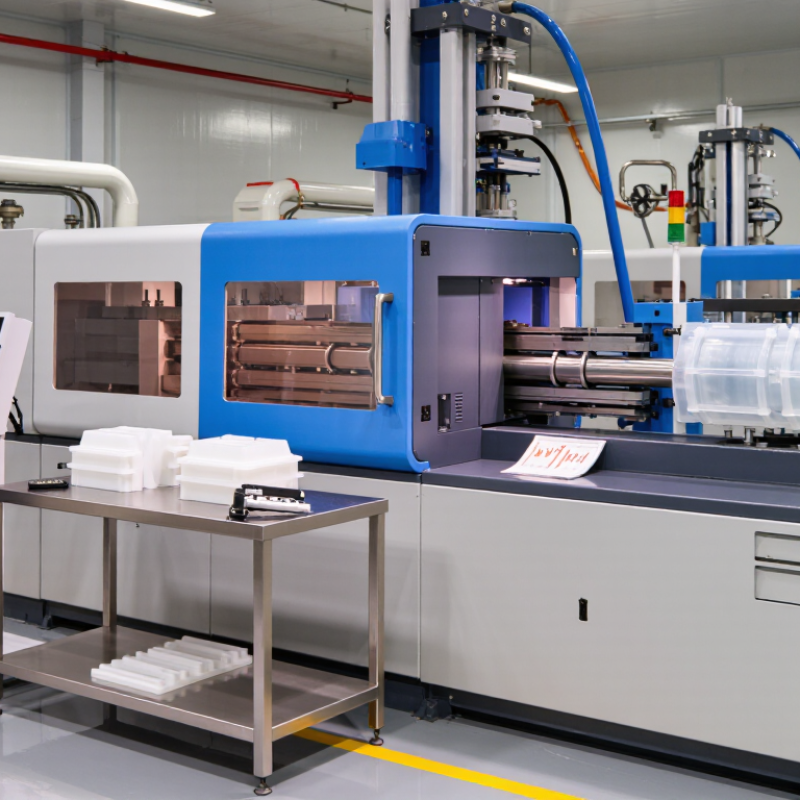
A polymer injection molding machine converts plastic pellets into precise, repeatable parts. Pellets enter through a hopper and move along a heated barrel. A rotating screw melts, mixes, and pushes the polymer forward. The clamping unit then closes the mold under high force. Injection follows. Cooling and ejection complete the cycle.

It is a controlled sequence, not a simple heating process. Screw design, barrel temperature, injection speed, and mold cooling affect the final part. Operators may see warpage near a thin rib or short shots around a narrow gate. These details require practical adjustment. The machine’s value comes from repeatability, automation, and material flexibility. It can process common thermoplastics for housings, medical components, automotive fittings, and everyday containers.

Industry demand supports this technology. Grand View Research reported that the global injection molding machine market was valued at approximately USD 15.4 billion in 2023, with continued growth expected through 2030. PlasticsEurope reported global plastics production of about 400.3 million tonnes in 2022, showing the scale of polymer processing worldwide. These figures do not guarantee every machine will deliver savings. Poor mold design, unstable cooling, or incorrect material drying can erase expected gains. That is the uncomfortable part. A machine may look efficient on paper, yet perform poorly beside a real production line. Selection should match the polymer, shot size, mold structure, cycle target, and operator capability.

How Does the Polymer Injection Molding Process Work?

A polymer injection molding machine turns small plastic pellets into precise, repeatable parts. The cycle starts with material preparation. Pellets may need drying because trapped moisture can create bubbles, weak areas, or surface marks. The dried polymer enters a heated barrel through a hopper.

Inside the barrel, a rotating screw conveys, melts, and mixes the material. Temperature zones gradually soften the polymer instead of burning it. When enough melt collects, the screw moves forward and injects it into a closed mold under controlled pressure. The mold must remain clamped firmly. Otherwise, the part may show flashing along its edges. Timing matters.

The molten polymer then cools against the mold walls and takes its final shape. Cooling channels remove heat, but uneven cooling can cause warpage or internal stress. After solidification, ejector pins release the part carefully. Operators check dimensions, weight, color, weld lines, and surface texture. Small details matter. In my experience, stable results depend on more than machine size. Material moisture, screw speed, injection pressure, mold temperature, and cooling time interact constantly. A setting that works for one polymer may fail with another. This is where process records and test samples become valuable. Still, injection molding is not perfectly forgiving. A minor temperature change can alter shrinkage, while excessive pressure can damage the mold or distort thin features. Careful monitoring makes the process more reliable.

Why Choose a Polymer Injection Molding Machine?

Injection molding combines repeatable automation, high production speed, and consistent part quality. The chart below shows a representative cycle for a 50 g thermoplastic component; actual timing varies with material, mold design, and part geometry.

How the process works: The polymer pellets are heated and plasticized, injected into the mold, held under pressure to compensate for shrinkage, cooled until rigid, and then ejected. Cooling commonly takes the largest share of the cycle because the molded part must solidify before removal.

Which Materials and Products Can It Handle?

A polymer injection molding machine is valuable because it can produce consistent parts from many thermoplastic materials. The material choice shapes the entire process.

Common options include polypropylene, polyethylene, ABS, nylon, polycarbonate, and thermoplastic elastomers. Each material behaves differently under heat and pressure. Polypropylene suits containers, caps, and lightweight household parts. ABS works well for rigid housings and control panels. Nylon supports gears, clips, and components needing strength. Thermoplastic elastomers create flexible grips, seals, and soft-touch surfaces.

The machine can handle products ranging from tiny connectors to large appliance panels. Mold design, wall thickness, cooling time, and resin moisture all affect quality. Moist nylon may cause bubbles or weak surfaces. Recycled material can reduce waste, but its flow may vary between batches. That detail is easy to underestimate. Products requiring food contact or medical use also need suitable certified materials and controlled production records.

Tips: Match the machine’s injection volume and clamping force with the mold. Check the resin’s drying temperature before production. Use uniform wall thickness whenever possible. A simple test mold can reveal warping, short shots, or surface marks early. Do not assume one setting fits every material. Experienced operators still adjust pressure, speed, and cooling after observing the first samples.

What Are the Main Benefits of Using This Machine?

A polymer injection molding machine turns heated plastic into precise, repeatable parts. Its main benefit is production consistency. With controlled temperature, pressure, and cooling time, each cycle can closely match the previous one. This matters when parts must fit together without repeated manual adjustment. In practical factory use, automated injection also reduces handling and shortens production time. Complex shapes, ribs, and threaded details can often be formed in one cycle. That can reduce assembly work and material waste.

The machine supports many production scales. Molds can create small technical components or larger housings, depending on machine capacity. Modern control systems record settings and process changes, helping operators trace quality problems. Energy use may also decrease when the machine uses efficient heating and hydraulic or electric controls. However, savings are not automatic. Poor mold design, unstable material moisture, or incorrect cooling can cause warping, flash, and weak surfaces. I have found that a fast cycle is not always a good cycle. Rushing it may create hidden defects.

Tips: Keep polymer moisture within the material supplier’s recommended range. Check barrel temperature with measured data, not only the screen display. Inspect molded parts after startup and after long production runs. Record mold temperature, injection pressure, and cooling time. Small records become useful evidence when quality changes. Also, review maintenance intervals honestly. A neglected nozzle or worn screw can quietly affect every part. The machine is powerful, but operator judgment still matters.

Why Choose a Polymer Injection Molding Machine? - What Are the Main Benefits of Using This Machine?

Benefit Area How the Machine Delivers It Typical Production Effect Practical Value Important Consideration
High Production Efficiency The machine injects molten polymer into a mold, cools the part, opens the mold, and ejects the product in a repeatable cycle. Cycle times can range from a few seconds to several minutes, depending on part size, wall thickness, material, and mold design. Suitable for producing large quantities of identical parts with less manual handling. Actual output depends on cooling time, mold cavities, machine capacity, and required quality controls.
Consistent Part Quality Programmable control of injection pressure, speed, temperature, holding pressure, and cooling time helps stabilize the molding process. Automated process control generally provides more uniform dimensions and appearance than manual forming methods. Reduces variation between production batches and supports repeatable assembly performance. Dimensional accuracy still depends on mold precision, material shrinkage, machine condition, and process settings.
Material Efficiency The mold delivers material directly into the part cavity, while runners and gates can be optimized for the selected polymer. Near-net-shape production can reduce machining, trimming, and secondary material removal. Lower material waste and fewer post-processing operations can improve overall manufacturing efficiency. Waste levels vary with mold layout, runner design, regrind policy, part geometry, and quality requirements.
Complex Part Geometry Molds can incorporate ribs, bosses, snap-fits, textured surfaces, undercuts, and multiple cavity features. Many functional features can be formed in one operation rather than assembled from several separate components. Supports lightweight designs and can reduce part count, assembly time, and fastening requirements. Complex molds may require slides, lifters, special ejection systems, or additional maintenance.
Automation Potential Robots and auxiliary equipment can handle part removal, inspection, trimming, packaging, and material feeding. Automation can support continuous operation and reduce direct operator involvement in repetitive tasks. Improves workplace consistency and can help reduce handling errors and labor-intensive steps. The return on automation investment depends on production volume, labor costs, part design, and line integration.
Broad Polymer Compatibility Injection molding machines can process many thermoplastics, including common, engineering, reinforced, and recycled grades when properly configured. Material selection can be matched to requirements such as strength, stiffness, chemical resistance, heat resistance, or appearance. Enables one manufacturing platform to serve different products and performance specifications. Each polymer requires suitable barrel temperature, mold temperature, drying, screw design, and processing conditions.
Cost Efficiency at Scale Once the mold and process have been validated, the same tooling can produce many consistent parts over its service life. Per-part manufacturing cost generally decreases as production volume increases because tooling and setup costs are distributed across more units. Well suited to medium- and high-volume production programs. For short runs, mold design and tooling costs may make alternative processes more economical.
Reduced Secondary Processing Surface textures, markings, mounting features, and some functional details can be incorporated directly into the mold. The finished part may require little or no machining, depending on the design and tolerance requirements. Can shorten the production route and reduce equipment, handling, and inspection steps. Painting, plating, welding, assembly, or precision machining may still be necessary for some products.
Repeatable Long-Term Production A validated mold and documented process parameters provide a repeatable basis for future production runs. Stable tooling and preventive maintenance help maintain product quality over extended production periods. Supports standardized manufacturing, quality audits, inventory planning, and reliable product replacement. Mold wear, material changes, equipment calibration, and maintenance practices must be monitored continuously.

Note: Production results are application-dependent and vary according to polymer grade, part geometry, mold design, machine size, process settings, and quality requirements.

How Should You Choose the Right Polymer Injection Molding Machine?

Choosing the right polymer injection molding machine begins with the material, not the machine’s advertised speed. PlasticsEurope’s Plastics—The Fast Facts 2024 reports global plastics production at 413.8 million tonnes in 2023. That volume includes materials with very different drying, melting, and shear requirements. A resin datasheet should guide barrel temperature, screw design, and residence time. Hygroscopic polymers may need a controlled drying system. Heat-sensitive polymers may need gentler processing.

Calculate projected part area, cavity pressure, and required clamping force before comparing quotations. Keep the normal shot size near 30–70% of the machine’s maximum capacity. This range can improve metering stability and reduce unnecessary residence time. Check injection speed and pressure against the actual wall thickness. A thin medical component needs different control than a thick structural housing. I have seen machines selected by tonnage alone. That shortcut can create flash, waste, or unstable filling.

Energy data also deserves careful review. The International Energy Agency’s Energy Efficiency 2023 report places industry near 37% of global final energy demand. Compare specific energy consumption, measured as kWh per kilogram, under similar production conditions. Hydraulic, hybrid, and all-electric systems may perform differently across duty cycles. Ask for test conditions, not attractive averages. ISO 20430 provides safety requirements for injection molding machines, but it does not choose the machine for you. Service access, spare-part availability, control repeatability, and operator training often matter more than a slightly faster cycle. A spreadsheet helps. It can still mislead.